

Kerrock posts
Why choose Kerrock over natural stone?
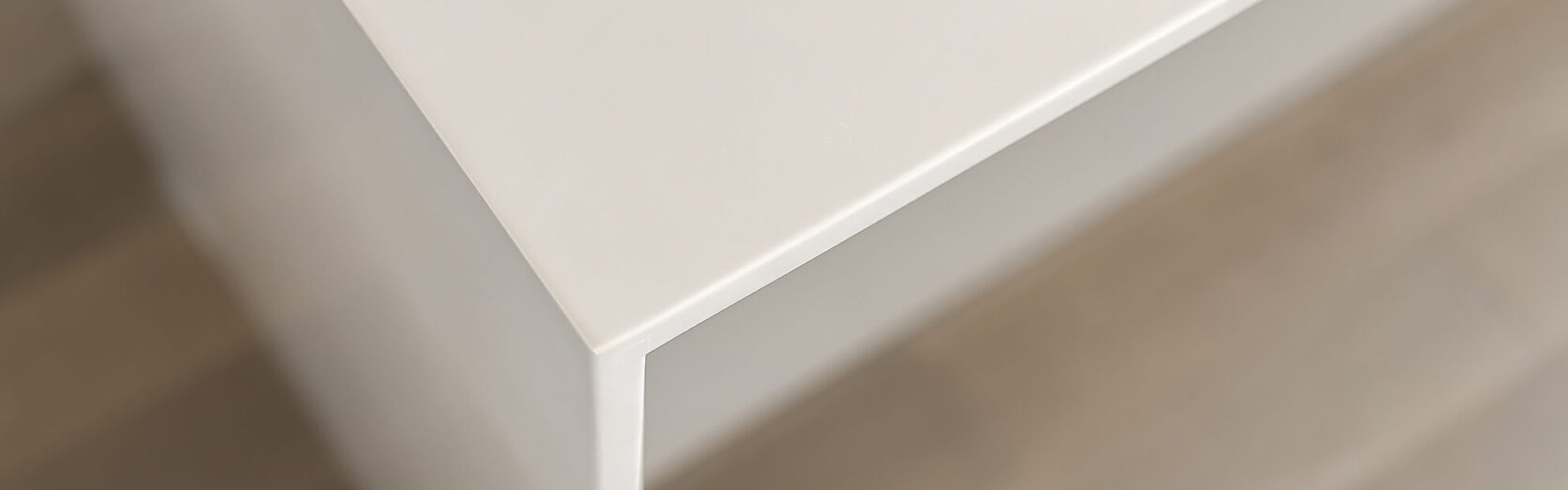
When choosing a material for a kitchen worktop, bathroom or commercial interior, appearance is not the only consideration. Cleaning, design possibilities and long-term maintenance also matter. Natural stone appeals with its unique patterns, while Kerrock offers advantages particularly where a non-porous surface, invisible joints and bespoke solutions are desired.
Non-porous surface without sealing
The porosity of natural stone varies depending on its type. Some stone surfaces require protective sealing to reduce liquid absorption and the risk of staining. Kerrock is non-porous, so it does not require this protection. This makes everyday care simpler: a soft cloth, warm water and a suitable household cleaner are usually sufficient. However, spills should still be wiped up promptly. A non-porous surface makes it easier to maintain hygiene on kitchen worktops, around washbasins and on frequently used surfaces in commercial spaces.
Invisible joints for a uniform appearance
With natural stone, joints between slabs are generally visible, and differences in patterns and veining can further emphasise the transitions. This natural variation gives stone its character, but makes achieving a completely uniform appearance across larger surfaces more challenging. Kerrock allows elements to be joined with invisible joints. With the right colour choice and skilled fabrication, longer worktops, wall cladding and other elements can appear as a single, continuous surface. This is an advantage in designs where clean lines and minimal visible interruptions are desired.
Integrated sinks and washbasins
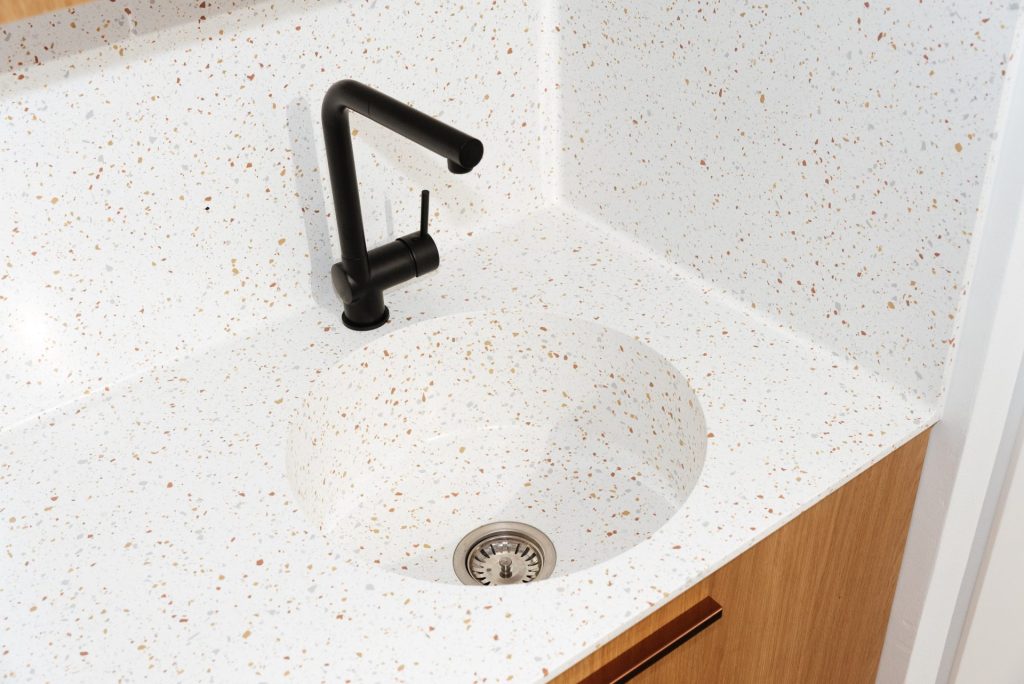
With stone worktops, the sink or washbasin is often a separate element, so particular attention must be paid to the joint between the materials. With Kerrock, a worktop and a sink or washbasin made from the same material can be connected with a smooth, nearly invisible joint. The benefit goes beyond appearance. Smooth transitions reduce the number of hard-to-reach edges where dirt can accumulate and make cleaning easier. A curved transition between the worktop and wall cladding can be created in a similar way.
More possibilities for curved shapes
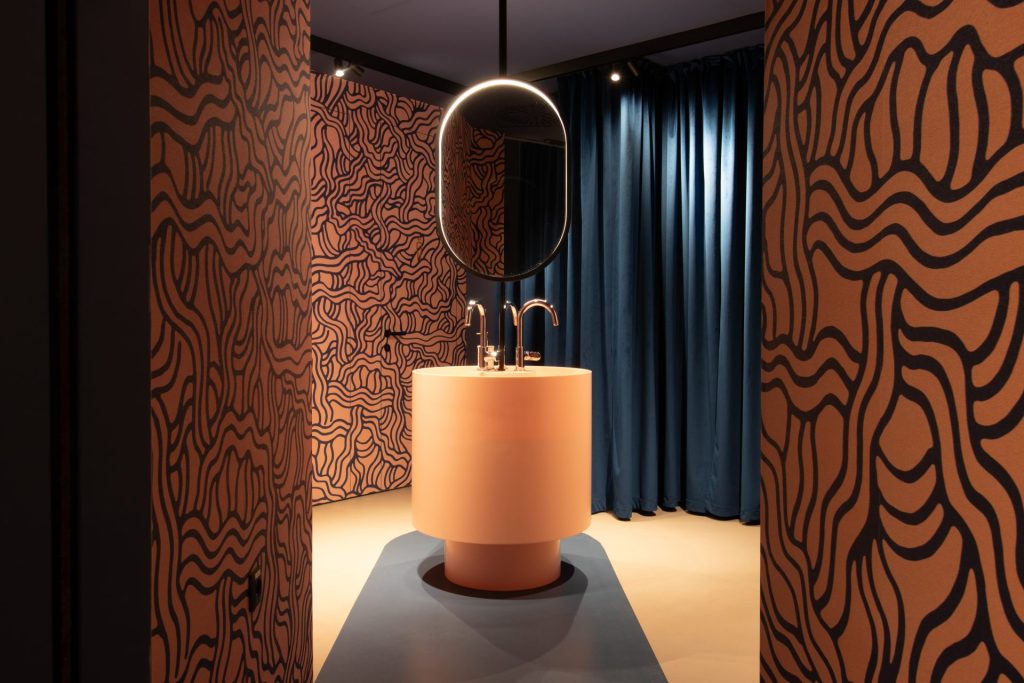
Natural stone can be cut, ground and worked into various shapes. In addition to mechanical processing, Kerrock also allows thermoforming, which involves shaping the material using heat. This makes it possible to create rounded edges, curved surfaces and more complex three-dimensional shapes that are harder to achieve in natural stone through cutting and grinding.
The possibility of renewal after years of use
Natural stone and Kerrock offer different advantages when it comes to durability. Granite, for example, stands out for its hardness, while an important advantage of Kerrock is the possibility of renewing its surface. Minor scratches and signs of wear can be removed through appropriate sanding, while repair options for more extensive damage should be assessed by a trained fabricator. Natural stone can also be restored, but the methods and results depend on the type of stone and the damage. To preserve the appearance of Kerrock, we recommend using a chopping board and trivets for hot cookware.
If easy maintenance, continuous surfaces and design freedom are key to your project, Kerrock is a considered alternative to natural stone.